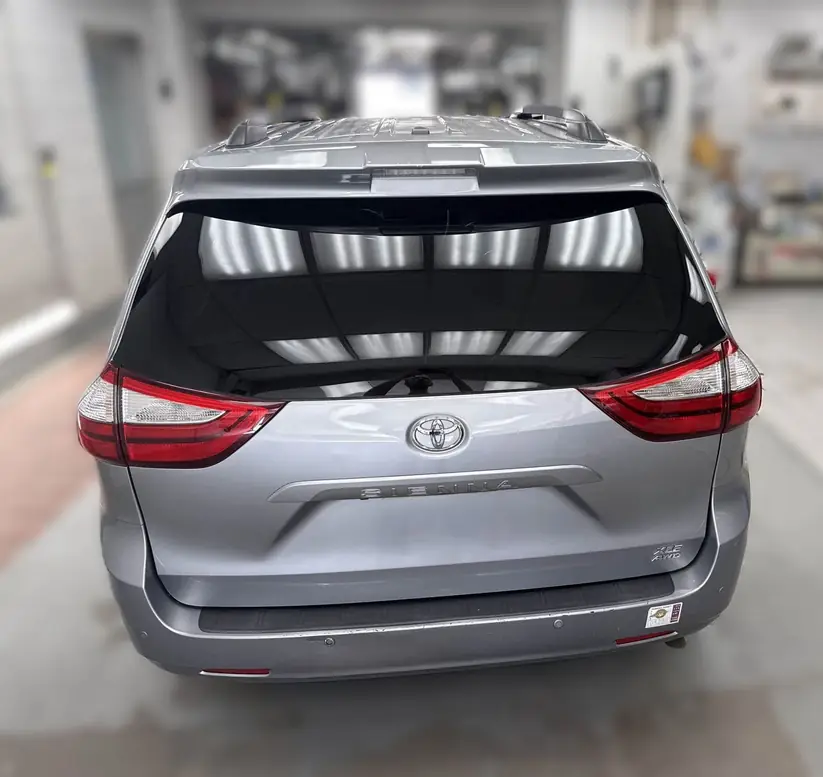
Why a repainted panel stops matching the rest of the car
Paint match fails for reasons you can see in daylight. Metallic and pearl colours carry tiny flakes that lie at an angle, and if the new coat is sprayed at a different angle or thickness the panel reads lighter or darker depending on where you stand. Solid colours fade too. A door that has spent years under Minnesota sun and winter road salt is no longer the colour on the paint code label, so a fresh mix straight from the formula can look wrong beside it.
Then there is orientation. A hood, a quarter panel and a bumper cover catch light at different angles, so a colour that looks perfect on a test card can still look off once it is bolted onto the car. The car is the reference, not the code, and a refinish that ignores that will show a seam on the first sunny day.
That is the problem New Central Auto Body works on from the first estimate: the colour that leaves our shop on Nicollet Ave has to sit next to your car's original finish without a visible line between them.
Matching the colour, blending the neighbours, then clear coat
Our refinishing is built around factory-match paint. The goal is the colour your car actually wears today, and the repaired panel is sprayed so it blends with your vehicle's original finish instead of ending in a hard edge.
Blending is the step that separates a repair you cannot find from one you notice every time you walk to the car. Rather than stopping the new colour at the edge of the damaged panel, the paint is feathered into the adjoining panel so the eye has no line to catch. That means a repair on one door often touches the next door or fender, and it is why a good estimate talks about panels, not just the dent.
Clear coat goes over the colour to give the gloss and the protection. It needs time to harden after it is sprayed, which is why a shop that rushes the finish tends to hand back paint that dulls or marks early. We follow manufacturer recommended OEM repair procedures on the work around the paint as well, so the panel underneath is prepared the way the factory expects. The free estimate shows which panels need paint and which only need blending.
What a good blend looks like, and how to treat new paint
Walk around the car in open light after pickup. Look at the repaired panel and its neighbours from a few angles, then crouch and look along the side of the car. Colour, flake and gloss should read as one surface. Reflections should run cleanly across the panel joints without a patch of different texture. If something looks off, say so at pickup, while the car is still on Nicollet Ave and the people who painted it are standing next to you.
New paint keeps hardening after it leaves the booth, so ask the shop when to wash it and when to wax it, and follow that advice rather than the habits you had with the old finish. In the meantime, avoid harsh chemicals and abrasive scrubbing, and keep bird droppings and tree sap off it.
If a scrape, a fender bender or years of fading have left a panel that no longer matches, call (612) 827-2589 or ask for a free estimate. We work with all insurance companies and handle the claim directly, and self-pay jobs get upfront pricing. Prefer to write? Use the estimate form on our contact page and we reply within 1 business day.