What Is Collision Repair?
A plain-language look at what a body shop does between the day you drop the car off and the day you drive it home.
October 14, 2026 · 4 min read
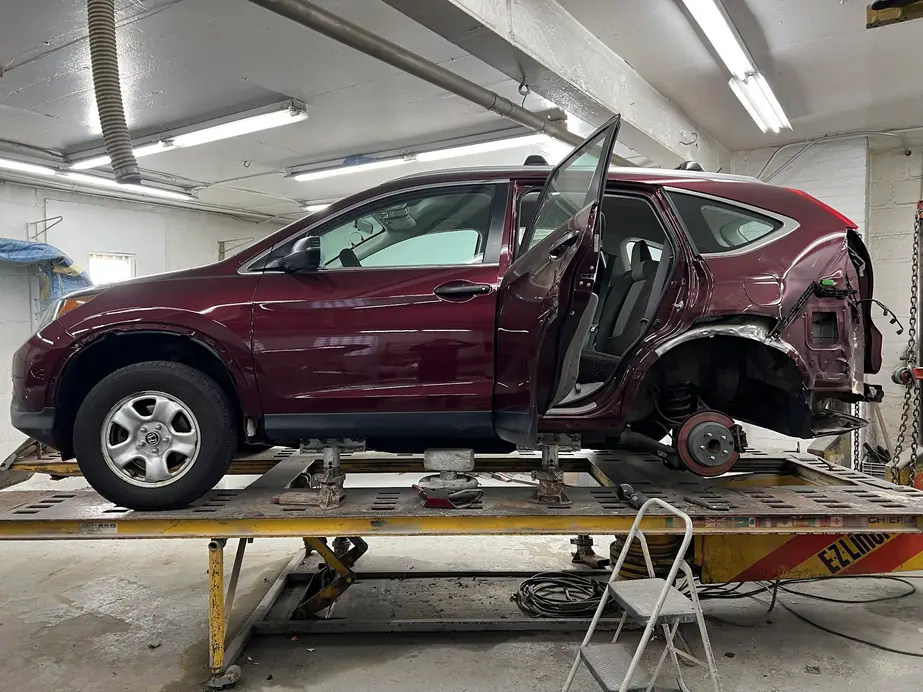
Collision repair is the work of putting a vehicle back to the condition it was in before an accident. That sounds simple, but the label covers a wide range of jobs, from a cracked bumper cover to a bent frame rail you can't see from the driver's seat. If you have never needed a body shop before, the vocabulary can feel like a different language. This guide explains what the work involves, what to expect along the way, and what to ask before you hand over your keys.
What collision repair covers
The term includes more than most people expect. A shop doing collision work is repairing the parts of the car that took the hit, and also checking the parts that may have been shifted or stressed by the impact, even if they look fine from the outside. Here is what typically falls under the heading.
- Dent removal and panel repair on doors, fenders, hoods, and quarter panels
- Bumper repair or replacement, including the brackets and sensors behind the cover
- Frame and structural straightening on a measuring system
- Replacement of exterior parts that are too damaged to save
- Paint, blending, and refinishing so repaired areas look like the rest of the car
- Scanning and calibration of driver assistance systems once the repair is done
Not every job touches every item on that list. A scraped bumper might need only repair and paint. A hard crash can involve all six, and the order matters, because structure comes first and cosmetics come last. A shop that tries to start with paint on a car that still has bent structure is working backward.
What happens between drop-off and pickup
Every shop runs its process a little differently, but the sequence is fairly consistent. It starts with an inspection. A technician looks at the visible damage, then takes panels off to find what is hiding behind them. Hidden damage is common. A bumper cover can look nearly fine while the absorber and reinforcement behind it are crushed. That is why a first estimate is a starting point, and why a shop may update it once the car is partly taken apart.
After the teardown, the structure gets measured and pulled back to specification if needed. Then come the body panels, then priming and paint, then reassembly. The last stage is checking everything: lights, sensors, panel gaps, and a drive to make sure nothing rattles or pulls to one side. Photos of your car on the frame machine or in the bay are a good sign. A shop that documents its work is a shop that expects you to ask questions.
Why manufacturer repair procedures matter
Automakers publish repair procedures for their own models. They say where a panel can be sectioned and where it can't, which welds or adhesives to use, and how a part should be fastened. Modern cars are built from several grades of steel and aluminum, and each one reacts differently to heat and pulling force. A repair that looks fine but ignores the procedure can change how the car protects you in the next crash.
New Central Auto Body follows manufacturer recommended OEM repair procedures, and it is a fair question to put to any shop you are considering. Ask which procedures they follow, and ask them to show you where those procedures apply to your car.
Choosing a body shop in Minneapolis
Start with how the shop communicates. You should be able to get a clear answer about what is wrong, what will be done, and who you will talk to. If you can, look at the shop floor. Cars in different stages of repair, organized bays, and technicians who are willing to explain something point to a place that does careful work.
Ask whether the shop will work with your insurer, whether it takes self-pay jobs, and whether the estimate is free. In Minnesota you have the legal right to choose your own repair shop, whatever your insurer recommends. A recommendation from your mechanic or a neighbor counts for a lot too. Cars in this part of the country take a beating from road salt, potholes, and ice, so a shop that has been in the neighborhood a long time has seen all of it.
Through insurance or out of pocket
Collision repair does not have to go through insurance. If the damage is small, or your deductible is higher than the repair, paying directly can make sense. If you do file a claim, a good shop will handle the estimate, the approvals, and the paperwork with your adjuster so you aren't stuck juggling phone calls. Either way, ask for the scope of work in writing before the job starts, and expect final pricing to be confirmed after an in-person inspection, since photos can't show everything.
After an accident, start with an estimate
If your car has been in an accident, the first step is simply to get it looked at. New Central Auto Body, at 4737 Nicollet Ave in South Minneapolis, offers free estimates with no obligation. Call (612) 827-2589 or book a free estimate online, and you will hear back within 1 business day.
New Central Auto Body, (612) 827-2589
Call (612) 827-2589More articles
How Auto Insurance Claims Work After an Accident
The terms and the order of events, explained in plain words, so the paperwork stops feeling like a second accident.
When Is a Car a Total Loss?
Hearing that your car is totaled is hard, and knowing how the decision gets made puts you in a better position to respond.